
3 Best Children’s Telescopes in 2026
Choosing a childrens telescope: compare three adult-led setups by stable mounting, eyepiece reach and the setup work you will handle.
Our top 3 picks
#1 Adult task: choose a firm surface, set up the collapsible tube and check the manual's alignment steps.
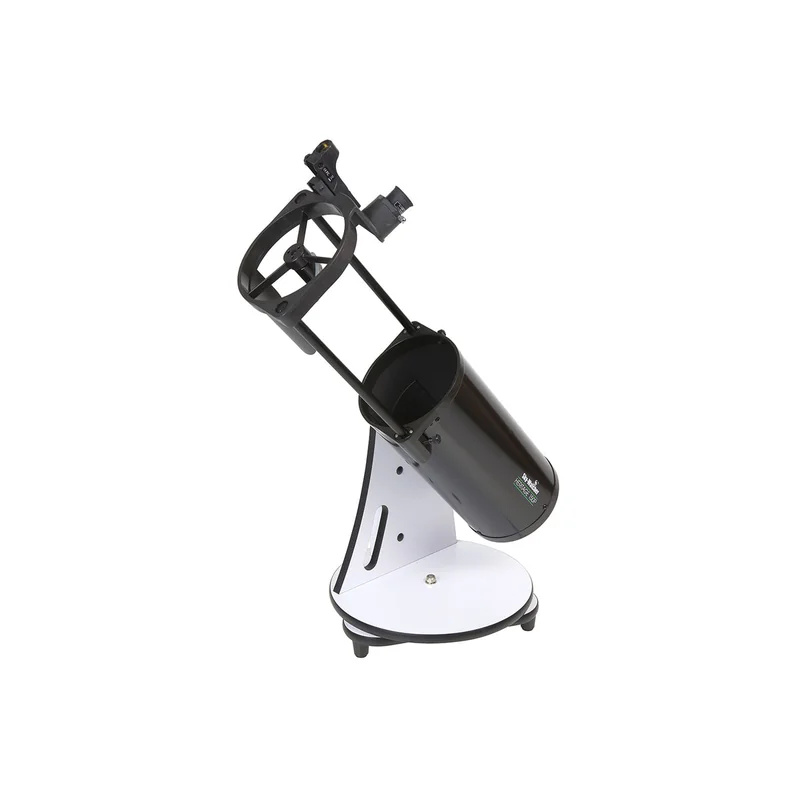
Sky-Watcher Heritage 150: a tabletop choice
- Optics: 150 mm reflector
- Focal length: 750 mm
- Setup task: Supply a firm surface at useful height; check mirror alignment
#2 Adult task: assemble the tripod, align the finding system and manage a compatible phone.
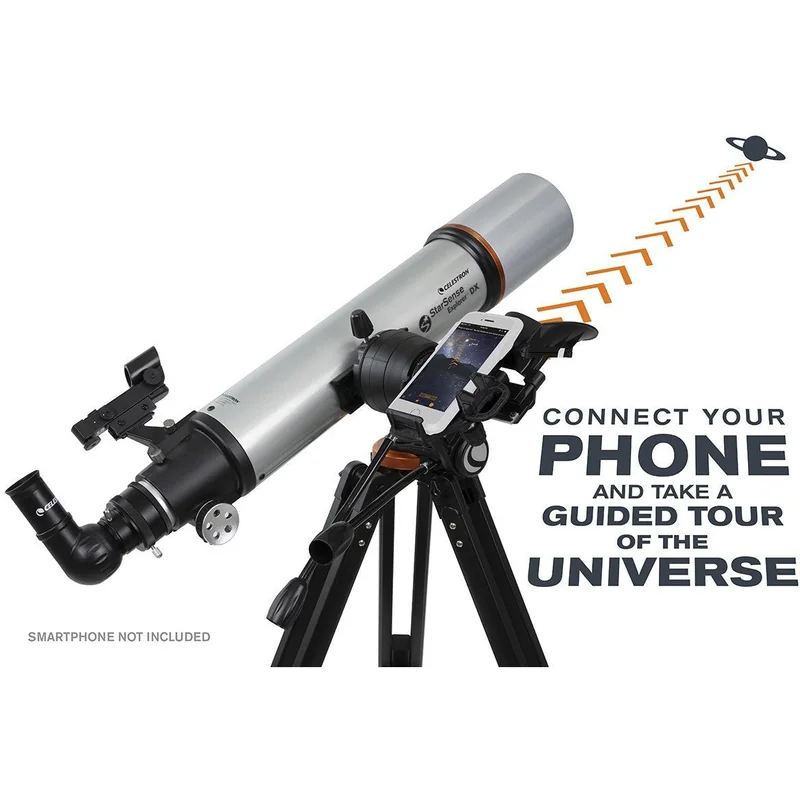
Celestron StarSense Explorer DX 102AZ: assisted finding
- Optics: 102 mm refractor
- Focal length: 660 mm
- Setup task: Set tripod, align finder and check phone compatibility
#3 Adult task: set the tripod, align the finder and learn how the controls move the field.
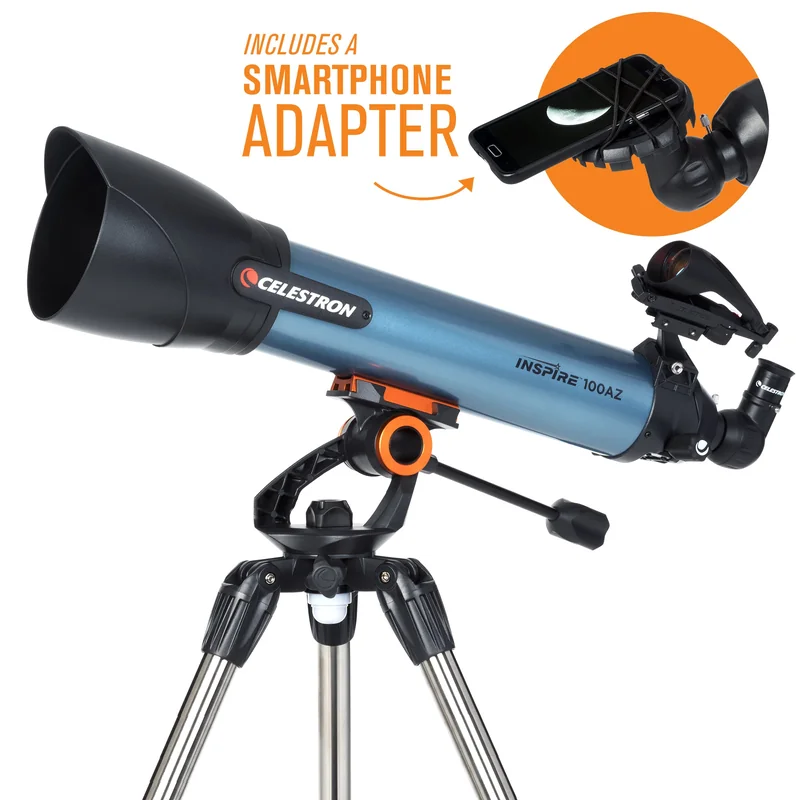
Celestron Inspire 100AZ: a manual refractor
- Optics: 100 mm refractor
- Focal length: 660 mm
- Setup task: Set tripod and locate targets manually
On this page
1. Sky-Watcher Heritage 150: a tabletop choice
Sky-Watcher Heritage 150: a tabletop choice
Choose the Heritage for a family with a firm raised support and an adult ready to learn mirror alignment. It has a 150 mm Newtonian mirror and a 750 mm focal length on a manual tabletop base. The adult sets up the collapsible tube and checks alignment. Prepare a comfortable eyepiece height before the child approaches; a shaky garden table makes focusing harder.
2. Celestron StarSense Explorer DX 102AZ: assisted finding
Celestron StarSense Explorer DX 102AZ: assisted finding
Choose the DX 102AZ when the adult wants help finding targets through a direct optical eyepiece. Its 102 mm refractor has a 660 mm focal length and a manual altazimuth mount. The adult assembles the tripod and manages the compatible phone. The app helps with aiming, while the adult moves the telescope to follow the target.
3. Celestron Inspire 100AZ: a manual refractor
Celestron Inspire 100AZ: a manual refractor
Choose the Inspire for an adult-led session with bright targets and a paper chart. It has a 100 mm refractor lens and a 660 mm focal length on a manual altazimuth mount. The adult sets the tripod, aligns the finder and learns the controls. Begin with the Moon or a known bright object, then give the child time to describe the view.
Compare the picks
| Pick | Key facts | Best fit |
|---|---|---|
| Sky-Watcher Heritage 150: a tabletop choice | Optics: 150 mm reflector; Focal length: 750 mm; Setup task: Supply a firm surface at useful height; check mirror alignment | #1 Adult task: choose a firm surface, set up the collapsible tube and check the manual's alignment steps. |
| Celestron StarSense Explorer DX 102AZ: assisted finding | Optics: 102 mm refractor; Focal length: 660 mm; Setup task: Set tripod, align finder and check phone compatibility | #2 Adult task: assemble the tripod, align the finding system and manage a compatible phone. |
| Celestron Inspire 100AZ: a manual refractor | Optics: 100 mm refractor; Focal length: 660 mm; Setup task: Set tripod and locate targets manually | #3 Adult task: set the tripod, align the finder and learn how the controls move the field. |
Factors to consider when choosing a child’s telescope
A childrens telescope should be chosen by the supervising adult who will set it up. Look for a stable view, reachable eyepiece and controls you can use in the dark. This comparison uses maker documentation for three real instruments. It does not claim a model fits every age or that a child can manage it alone.
Factors to check with the adult in charge
Measure the storage route and think about who carries each part. Read the maker's included-item list before buying accessories. A larger aperture should not absorb the budget for the firm surface or stable mount it needs.
Set a viewing height that lets the child look without leaning on the telescope. A touch can move the field or make it shake. Ask the child to describe the view while the adult handles focus where needed. Keep turns short enough that waiting does not become the main activity.
Start with the bright edge of the Moon or a clear star pattern, and ask the child to describe the view. The Moon has bold light and shadow; planets are small and faint objects may look grey. Pair the equipment with constellation activities so the session still has a useful task when clouds interrupt.
Read next
Which telescope suits your family
Choose a childrens telescope around the supervising adult's setup skills and the child's viewing position. The Heritage needs a suitable table, the DX adds phone-assisted finding and the Inspire takes the manual route. A calm, reachable, steady view is the useful result.
FAQ
Which telescope can a child use alone?
This guide chooses an adult-led setup. The adult handles assembly, safe pointing and the equipment changes. The child can look, describe and sketch what is visible. Choose the model the adult can set up and use well. Match the eyepiece height, mount controls and viewing position to the child.
Is app assistance the same as a smart telescope?
No. The StarSense Explorer in this comparison helps the adult find targets while the telescope is moved by hand. Its eyepiece shows the optical view. A smart imaging telescope records a sensor image for a screen. The two methods have different setup needs and give a different experience.
What should the first target be?
Choose a bright, easy-to-find target that is above obstructions at the session time. The Moon can work well when its phase and height suit the plan. Start at low power and let the child describe the view. Keep a paper activity ready if the sky does not cooperate.
Is a bigger telescope always better for a family?
Only if the full setup is practical. A larger tube or base can be harder to carry and may put the eyepiece out of easy reach. Stability and adult familiarity matter. Check the complete kit in the place you will use it before choosing by aperture alone.