
3 Telescope Eyepiece Options in 2026
Compare three telescope eyepiece focal lengths, calculate magnification and check barrel fit, field of view and eye relief.
Our top 3 picks
#1 Choose it for: finding targets or taking a lower-power view when your kit lacks this focal length.
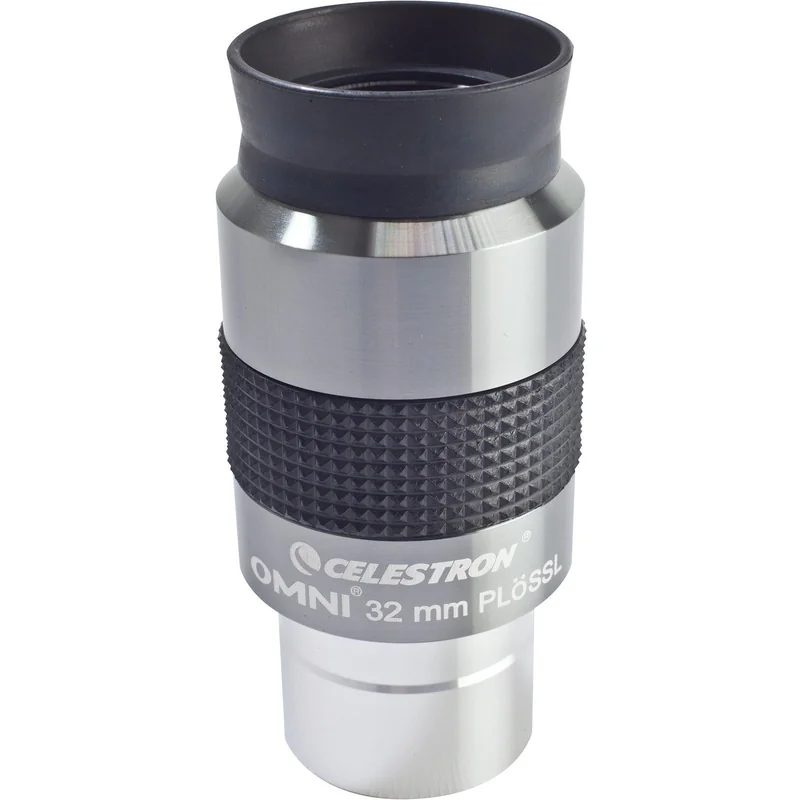
Celestron Omni 32 mm eyepiece
- Optics: Four-element Plössl
- Focal length: 32 mm
- Fit: 1.25-inch barrel
#2 Choose it for: a middle step when the supplied low- and high-power eyepieces leave too large a gap.
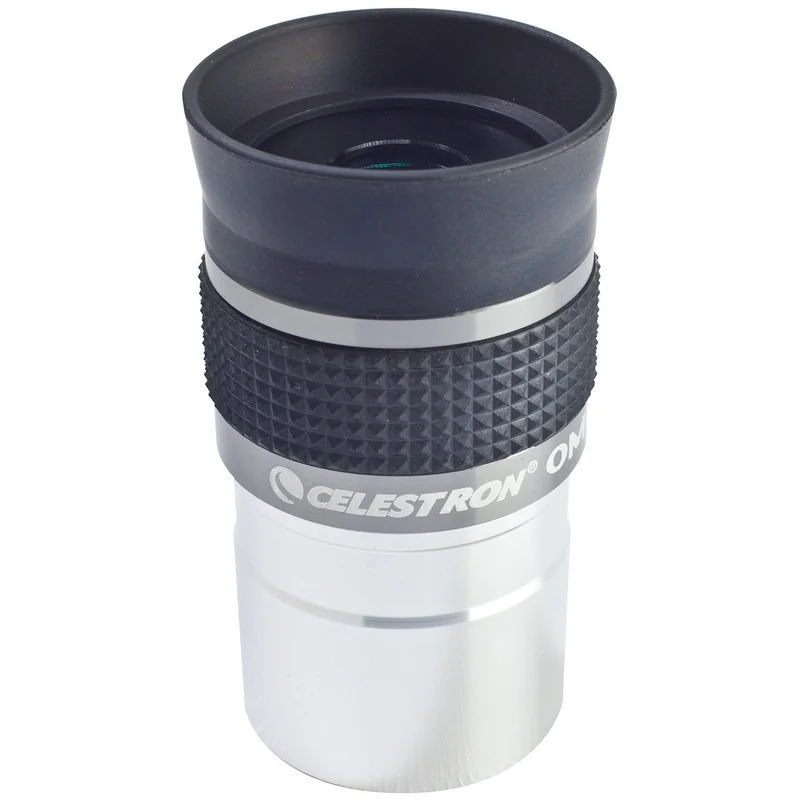
Celestron Omni 15 mm eyepiece
- Optics: Plössl
- Focal length: 15 mm
- Fit: 1.25-inch barrel
#3 Choose it for: more image scale in a compatible telescope with a steady view.
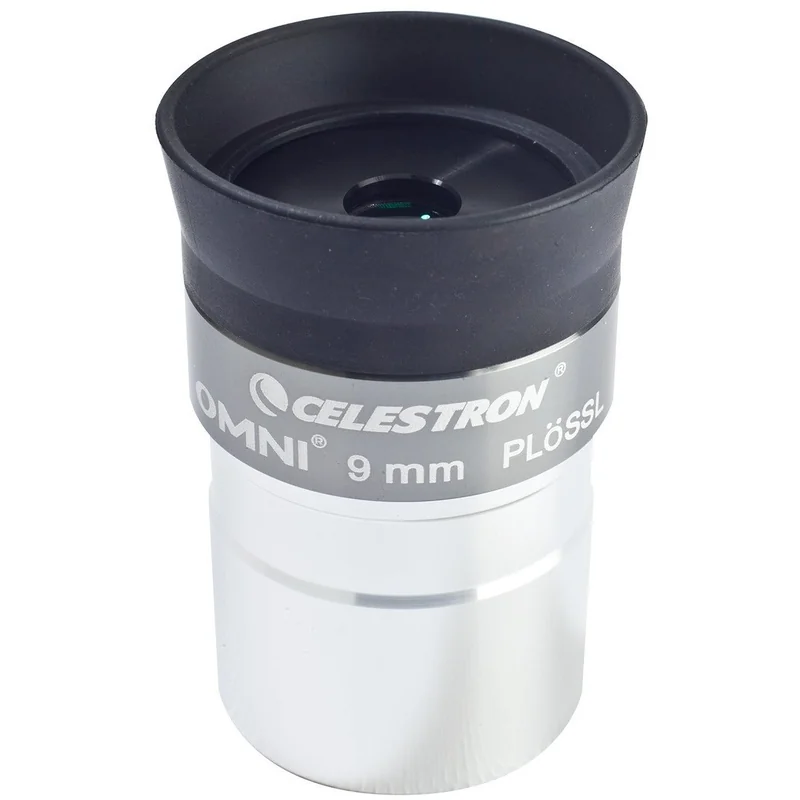
Celestron Omni 9 mm eyepiece
- Optics: Plössl
- Focal length: 9 mm
- Fit: 1.25-inch barrel
On this page
1. Celestron Omni 32 mm eyepiece
Choose this for finding targets or taking a lower-power view when your kit lacks this focal length. The 1.25-inch field stop limits how wide the attainable field can be. It is not a substitute for every wider-barrel eyepiece. Check that the resulting exit pupil and field fit the observing task. A long focal length is useful because of the view it gives, not because the number is larger.
- Optics
- Four-element Plössl
- Focal length
- 32 mm
- Fit
- 1.25-inch barrel
- Included
- Single eyepiece
- Weight
- 112.5 g
2. Celestron Omni 15 mm eyepiece
Choose this for a middle step when the supplied low- and high-power eyepieces leave too large a gap. Its stated 13 mm eye relief may not suit every glasses wearer. Compare it with the space your eye needs. It has a four-element Plössl design and a 50-degree apparent field.
- Optics
- Plössl
- Focal length
- 15 mm
- Fit
- 1.25-inch barrel
- Included
- Single eyepiece
3. Celestron Omni 9 mm eyepiece
Choose this for more image scale in a compatible telescope with a steady view. The stated 6 mm eye relief means close eye placement. Higher power also asks more of focus and manual following. Choose this focal length only after calculating the power in your instrument. A shorter eyepiece does not add aperture or fix a soft image.
- Optics
- Plössl
- Focal length
- 9 mm
- Fit
- 1.25-inch barrel
- Included
- Single eyepiece
Compare the picks
| Pick | Key facts | Best fit |
|---|---|---|
| Celestron Omni 32 mm eyepiece | Optics: Four-element Plössl; Focal length: 32 mm; Fit: 1.25-inch barrel | #1 Choose it for: finding targets or taking a lower-power view when your kit lacks this focal length. |
| Celestron Omni 15 mm eyepiece | Optics: Plössl; Focal length: 15 mm; Fit: 1.25-inch barrel | #2 Choose it for: a middle step when the supplied low- and high-power eyepieces leave too large a gap. |
| Celestron Omni 9 mm eyepiece | Optics: Plössl; Focal length: 9 mm; Fit: 1.25-inch barrel | #3 Choose it for: more image scale in a compatible telescope with a steady view. |
Factors to consider when choosing an eyepiece
Choose the power that fills a gap in your present kit. These three eyepieces share a 1.25-inch barrel, but their focal lengths and eye relief lead to different views. Start with the telescope’s focal length and the eyepieces you already use.
Calculate the three powers
Divide telescope focal length by eyepiece focal length. In a 750 mm telescope, the 32 mm gives about 23x, the 15 mm gives 50x and the 9 mm gives about 83x. In a 1200 mm telescope, they give about 38x, 80x and 133x. These are arithmetic examples using the same eyepieces in two focal lengths.
The 15 mm can therefore be a medium-power step in one telescope and a much closer view in another. Choose by the calculated result. A long-focal-length telescope may already have enough power with its supplied eyepiece, while a shorter telescope needs a shorter eyepiece for the same scale.
Use a low-power eyepiece for finding
The 32 mm is the lowest-power option here. It is useful for finding a target, following a broad star pattern and framing a large open cluster. Center a known bright star, focus, then move in small steps using your chart. Keeping nearby stars in the field makes it easier to see whether you moved the right way.
For the Moon, begin with the whole disk or a broad section of its edge. After you have found the feature you want, change eyepieces with the target centered. A wide starting view also helps when a manual mount is unfamiliar. You have more room to correct a small aiming error.
Field width and apparent field
Apparent field describes the view at your eye. True field is the patch of sky. As a rough estimate, divide apparent field by power. With the 15 mm’s stated 50-degree apparent field at 50x, the estimate is 1 degree. At 80x it is about 0.63 degree. The BAA eyepiece guide explains the distinction and this estimate.
This helps you choose a role for an eyepiece. A broad field holds more of a cluster and gives a manually followed planet more room before it reaches the edge. Exact field depends on the field stop and optical design. Use the estimate to plan framing, then learn the actual field with a familiar star pattern.
Exit pupil changes with power
Divide telescope aperture by magnification to estimate exit pupil. In a 150 mm, 750 mm-focal-length telescope, the three examples above give about 6.4 mm, 3 mm and 1.8 mm. The smaller exit pupil accompanies the larger image. On an extended object, a higher-power view can look dimmer even though the object looks larger.
That trade-off is useful on the Moon, where there is plenty of light, but it can make a faint nebula harder to see. Try the medium step before the shortest eyepiece. Keep the view that makes the feature easiest to identify, rather than the one with the largest number.
Eye relief and glasses
The 32 mm has 22 mm of stated eye relief, the 15 mm has 13 mm and the 9 mm has 6 mm. The 9 mm asks for close eye placement. If you wear glasses at the eyepiece, the longer-relief options may make the full field easier to reach. Set the eyecup according to the manual and keep your head relaxed.
A dark crescent or a field that vanishes as you move your head can come from eye position. Settle at the intended viewing distance before turning the focuser. At a shared station, let the next viewer find that position before you change a focus that was already sharp.
Match the power to the target
Use the low-power view for finding and broad deep-sky objects. Use a middle step to examine the Moon’s shadows or separate stars in a cluster. Use the highest useful step for a small planet only while the image remains steady. Added power enlarges atmospheric blur and mount shake as well as the target.
Center the planet before swapping eyepieces. Secure the next eyepiece, refocus gently and let the mount stop shaking. Watch through several calm moments. If the edge remains soft, return to a lower power. A clearer small outline is more useful than a large moving blur.
Build a small set around real gaps
List your current focal lengths and calculated powers. A supplied 10 mm and a new 9 mm are close steps. A 32 mm and a 15 mm serve more distinct roles. A 2x Barlow doubles the power of an existing eyepiece, so include it in that list before buying a duplicate combination.
Check barrel size, diagonal clearance and focus travel in the telescope instructions once for the planned optical train. Keep caps in a clean pocket while observing. At the end, follow the maker’s cleaning and drying advice, then store each eyepiece where its focal length is easy to identify in dim light.
Which eyepiece to choose
Choose the 32 mm for a low-power field, the 15 mm for a middle step and the 9 mm for more scale when close eye placement suits you. For help with the basic setup, use the telescope guide. Compare Barlows only after the power list shows a useful role.
FAQ
Does a shorter telescope eyepiece give more power?
With the same telescope, dividing its focal length by a smaller eyepiece focal length gives a larger power. That larger image is useful only when focus and conditions support the detail. Calculate the result before buying, then compare eye relief and the handling of the intended setup.
Can all three fit a 1.25-inch focuser?
The maker lists a 1.25-inch barrel for these exact Omni models. That establishes the nominal mechanical size, but you should still check the telescope or diagonal instructions and focus travel. An additional adapter or Barlow changes the optical train.
Should I buy the 9 mm first for planets?
Only if its calculated power fills a useful gap and its short eye relief suits you. Your telescope may already include a similar eyepiece. A calm lower-power view can be more useful than a larger blurred one. Start from the current kit and the view you can actually keep centred.
Is apparent field the amount of sky I will see?
It describes how wide the eyepiece view appears to your eye. The true patch of sky also depends on the telescope and the eyepiece’s field stop. Use the maker’s values with the correct calculation. Do not compare an apparent-field figure directly with a sky chart’s angular width.