
3 Best Binoculars for Stargazing in 2026
We may earn a commission from some links on this page.
Compare the best binoculars for stargazing across 7x50, 10x50 and 15x70 setups, covering handheld stability, field of view and mounting tradeoffs.
Our top 3 picks
Best fit: a beginning observer who wants a lower-power view for short handheld sessions and broad star patterns.
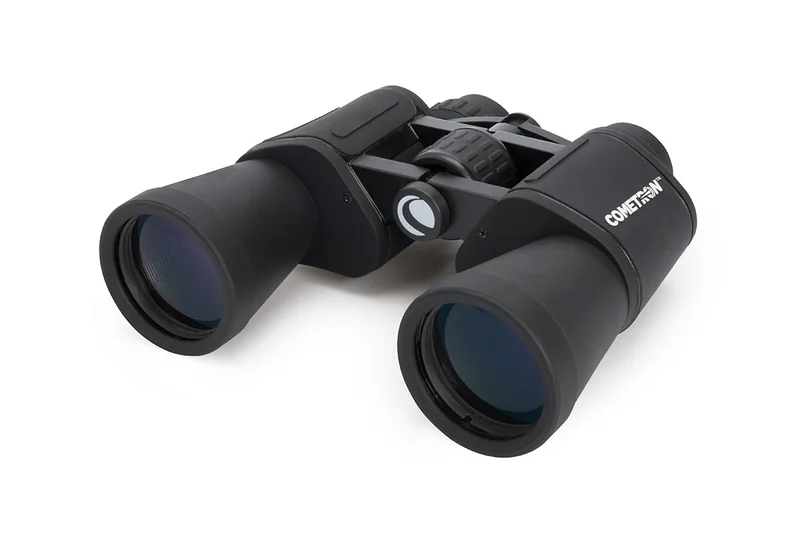
Celestron Cometron 7x50: start with a broad field
- Power and aperture: 7x; 50 mm
- True field: 6.6 degrees
- Eye relief: 13 mm
Best fit: an observer who wants 10x reach in a 50 mm Porro-prism body with long eye relief for seated handheld viewing.
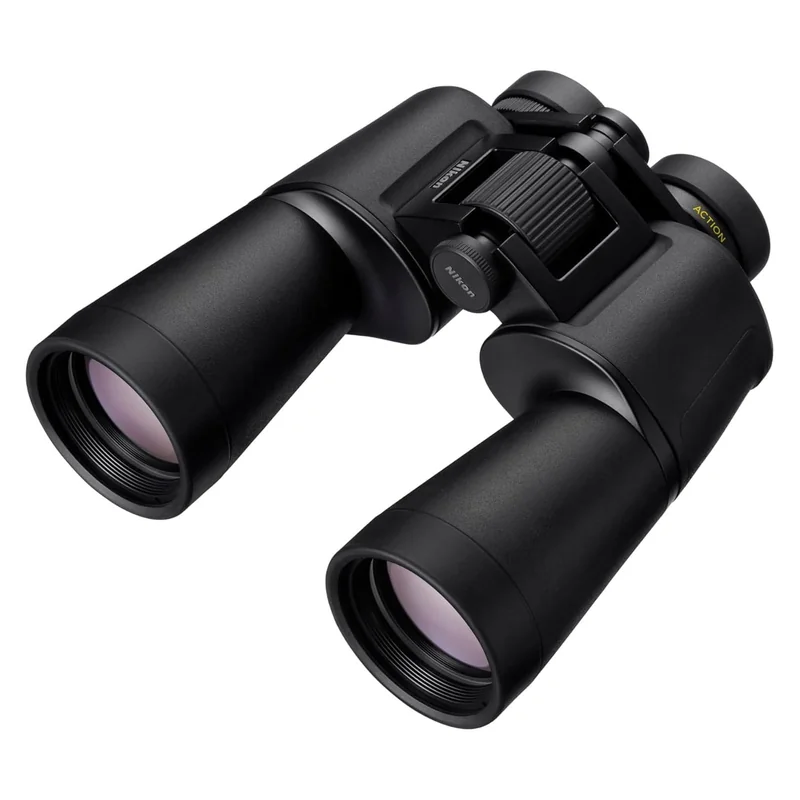
Nikon Action 10x50: step up to 10x reach
- Power and aperture: 10x; 50 mm
- True field: 6.4 degrees
- Eye relief: 17.3 mm
Best fit: an observer who wants a larger-aperture binocular view and will plan the mount and viewing position with it.
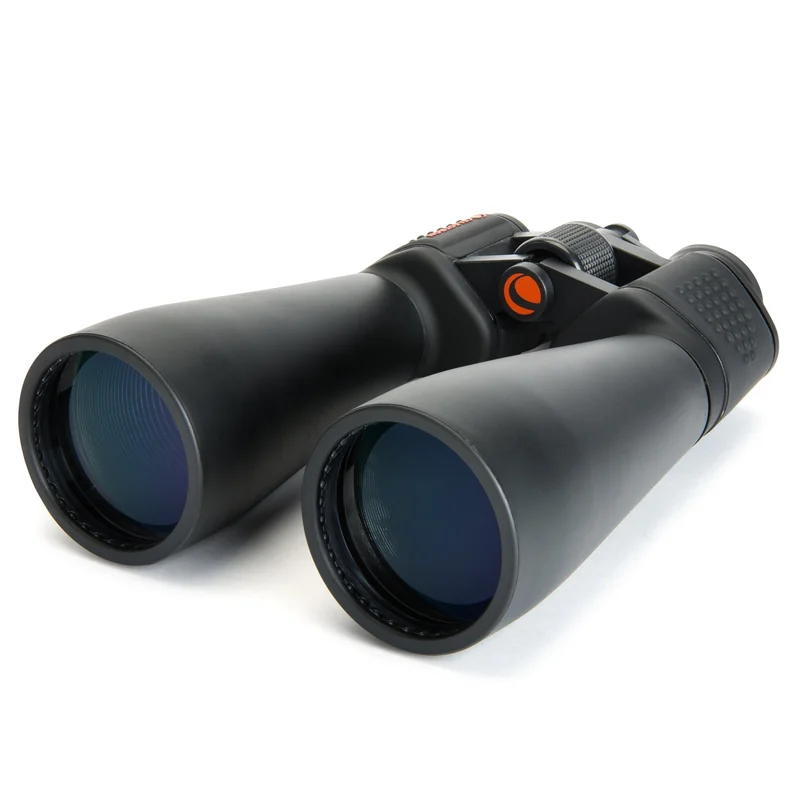
Celestron SkyMaster 15x70: plan a steady setup
- Power and aperture: 15x; 70 mm
- True field: 4.4 degrees
- Eye relief: 18 mm
On this page
Celestron Cometron 7x50: start with a broad field
Celestron Cometron 7x50: start with a broad field
Choose Cometron for a broad handheld view at 7x. It has 50 mm openings, a 6.6-degree field and 13 mm eye relief. The body weighs 774 g, with a hinge range of 56 to 72 mm. The kit includes a strap, case, caps, cloth and manual. An adapter is separate for tripod use. Start from a supported seat and set the hinge and focus for each viewer.
Nikon Action 10x50: step up to 10x reach
Nikon Action 10x50: step up to 10x reach
Choose the Nikon Action 10x50 for closer 10x views without stepping up to a 70 mm body. It pairs 50 mm objective lenses with a 6.4-degree real field, 5 mm exit pupil and 17.3 mm eye relief. The rubber-armored aluminum-alloy Porro-prism body weighs 935 g (33 oz.), with a 56 to 72 mm interpupillary distance range and turn-and-slide rubber eyecups. Sit with your elbows braced so the higher power stays steady.
Celestron SkyMaster 15x70: plan a steady setup
Celestron SkyMaster 15x70: plan a steady setup
Choose SkyMaster for a closer view on a mount. Its 15x power and 70 mm openings give more scale, with a 4.4-degree field and 18 mm eye relief. The body weighs 1361 g, with a 56 to 72 mm hinge range. It includes a tripod adapter, caps, rainguard, strap, cloth and manual. A tripod is separate. Position the chair so you can reach both eyepieces at the intended sky angle.
Compare the picks
| Pick | Key facts | Best fit |
|---|---|---|
| Celestron Cometron 7x50: start with a broad field | Power and aperture: 7x; 50 mm; True field: 6.6 degrees; Eye relief: 13 mm | a beginning observer who wants a lower-power view for short handheld sessions and broad star patterns. |
| Nikon Action 10x50: step up to 10x reach | Power and aperture: 10x; 50 mm; True field: 6.4 degrees; Eye relief: 17.3 mm | an observer who wants 10x reach in a 50 mm Porro-prism body with long eye relief for seated handheld viewing. |
| Celestron SkyMaster 15x70: plan a steady setup | Power and aperture: 15x; 70 mm; True field: 4.4 degrees; Eye relief: 18 mm | an observer who wants a larger-aperture binocular view and will plan the mount and viewing position with it. |
Factors to consider when choosing stargazing binoculars
The main choice is a broad 7x handheld view, a 10x middle step or a closer mounted 15x view. Set eye spacing and focus before judging any pair. For glasses wearers, usable eye relief can decide the fit before aperture or power does.
Compare scale and field together
The Cometron gives a 6.6-degree field at 7x. The Nikon Action 10x50 gives a 6.4-degree real field at 10x. The SkyMaster gives 4.4 degrees at 15x. A target looks about 2.1 times larger across in the SkyMaster than in the Cometron, while the Cometron covers 1.5 times as much sky across; the Action 10x50 adds magnification over 7x while keeping nearly the same real field. The broader field helps when matching a star pattern from a chart; the closer view helps separate points within a cluster.
Move between fields with a small overlap. First place a bright star near one side of the binocular view, then move until the next chart star enters. With the 7x and 10x models, more of the route stays visible at once. With the SkyMaster, smaller moves and a steady mount make the same route easier to follow.
What to look at with each pair
Start on the Moon while it has a clear day-night boundary. At 7x, look for the broad dark plains and the rough edge of the lit area. At 10x, the limb and larger plains gain scale while remaining practical from a braced chair. At 15x, the same features have more scale, and a steady mount helps hold them still. Fine crater detail is a reason to move to a telescope rather than add strain to a handheld binocular view.
For open star clusters, choose a target high enough to clear roofs and trees. The lower-power pair gives more sky around the group. The 10x and 15x models bring the stars farther apart in the view. A bright cluster is a useful first deep-sky target because its points let you judge both focus and steadiness.
Large faint objects need a dark sky as well as aperture. Shade your eyes from nearby lights and give them time to settle. A galaxy may appear as a pale patch rather than a colorful shape. Keep the chart’s angular size in mind: looking for a small bright dot can make you miss a broad low-contrast glow.
Exit pupil explains part of the view
Divide aperture by power: 50 divided by 7 gives about 7.1 mm, 50 divided by 10 gives 5 mm, and 70 divided by 15 gives about 4.7 mm. These are the exit pupils listed for the three models. Your eye must accept that beam. If your pupil is smaller than the beam, some of the light misses it. More aperture alone therefore does not tell you how bright an extended target will look.
A larger exit pupil also gives some room for eye placement. Set the eyecups so that both eyes see a clean circular field. A dark crescent that shifts when you move your head often means your eyes are off the viewing position. Settle the eye position before turning the focus wheel again.
Fit both eyes before the first target
All three models have a listed hinge range of 56 to 72 mm. Adjust the hinge until the circles merge into one field. Follow the manual’s diopter sequence so each eye is sharp, then use the central wheel for normal focus. A new viewer needs their own hinge and focus settings, even when the target stays centered on a mount.
The Cometron has 13 mm of listed eye relief, the Nikon Action 10x50 has 17.3 mm, and the SkyMaster has 18 mm. With your normal glasses on, lower the eyecups and look for the edge of the field. Keep the pair that lets you see the whole circle comfortably. Pressing glasses into the eyepieces makes a long session tiring and can move the view.
Handheld and mounted sessions
For the 774 g Cometron, sit with your back supported and your elbows close to your body. Find the bright starting star by eye, then raise the pair without looking away. Take short looks and lower it to rest between fields. This suits a quick session with a chair and a chart.
The 935 g Nikon Action 10x50 sits in the middle: the textured rubber-armored body is still practical for seated handheld observing when your elbows are braced, though 10x magnifies hand shake more than 7x.
The 1361 g SkyMaster is a different carrying task. Fit its supplied adapter to a separate suitable tripod. Tighten the head so it holds the intended sky angle, then position the chair where both eyes reach the eyepieces. Test a high target as well as one near the horizon: a camera tripod can hold the load yet leave too little room for your head.
A mount keeps the field ready for another viewer and removes much of the hand shake. It also adds a tripod, head and adapter to the kit. Put those parts in the same carrying plan. If the whole setup takes longer than the short session you want, a 50 mm handheld pair is the more practical choice.
Care after observing
Let damp equipment dry as its manual directs before closing the case. Keep caps away from grit and use the maker’s lens-cleaning method. Store optics in a dry place and check the stated weather-resistance class for the exact model. Keep the SkyMaster adapter with the case so a missing small part does not stop the next session.
Which binoculars to choose
Choose the Cometron for short handheld sweeps and a wider star-pattern view. Choose the Nikon Action 10x50 for extra magnification and longer eye relief in a 50 mm handheld body. Choose the SkyMaster for a steadier mounted session with more image scale. For fine planet detail, compare a visual telescope. For help setting any pair, use the focus guide.
FAQ
Which is easier to use without a mount?
The Cometron has the lowest power and mass in this comparison, so it is the easiest handheld candidate, with the 935 g Nikon Action 10x50 usable from a braced seat. Set the chair and grip for the person who will use the pair. Try a seated view and check whether the stars settle. If your arms tire or the field keeps shaking, reassess the viewing position.
Does the SkyMaster include a tripod?
The maker's included-items list names a tripod adapter, not a tripod. Budget and carry the separate tripod if you plan mounted use. Check its head, height and load rating with the binocular attachment. Make sure you can reach the eyepieces when the pair points well above the horizon.
Are these suitable for someone wearing glasses?
Check the full field with your own glasses. The makers list 13 mm eye relief for Cometron, 17.3 mm for Nikon Action 10x50 and 18 mm for SkyMaster. Eyecup design and glasses frames affect the actual view. The longer figure is useful to compare, but it cannot replace a fit check.
Why are there only three models here?
They cover three distinct uses: 7x lower-power wide-field viewing, 10x higher-power 50 mm viewing with long eye relief, and a larger 15x70 mounted setup. Use the three setups to choose a carrying and viewing routine you can repeat. Use the comparison to decide the kind of kit first, then verify the exact model before buying.
Can these binoculars show colorful nebula views?
Do not expect the view to match a processed photograph. Faint objects often appear as pale patches to the eye, and sky glow can hide them. These pairs are for live optical viewing. A system that records and stacks images serves a different task and has different setup needs.