
Telescope Accessories in 2026
Choose telescope accessories by prioritising stability, fit and a real viewing need before adding extra equipment to your kit.
Our top 2 picks
Choose it for: a low-power starting view when its focal length adds something your kit lacks.
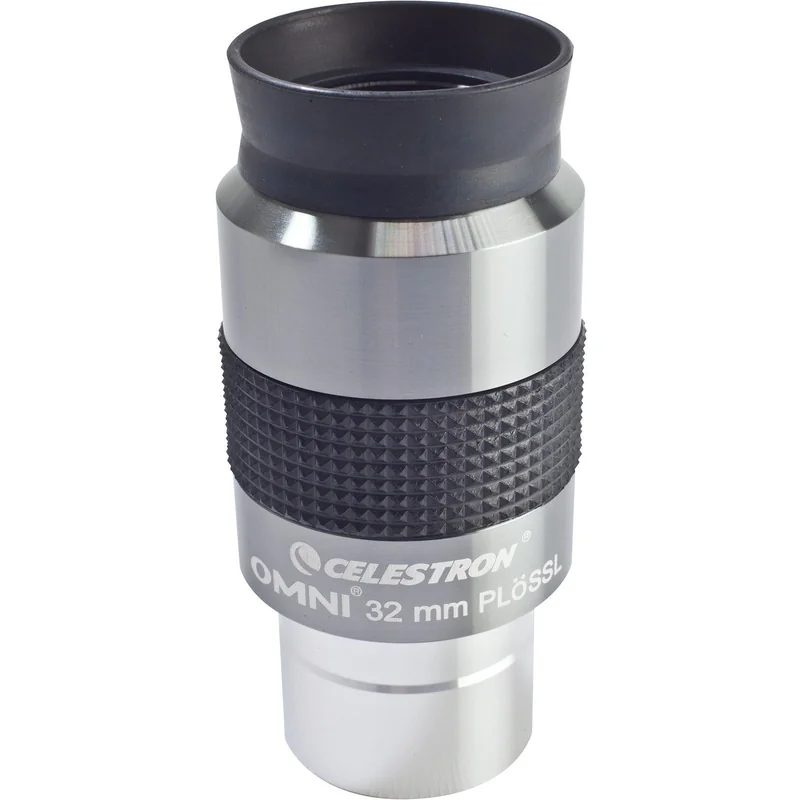
Celestron Omni 32 mm eyepiece
- Optics: Four-element Plössl
- Focal length: 32 mm
- Fit: 1.25-inch barrel
Choose it for: adding higher powers from eyepieces you already find comfortable.
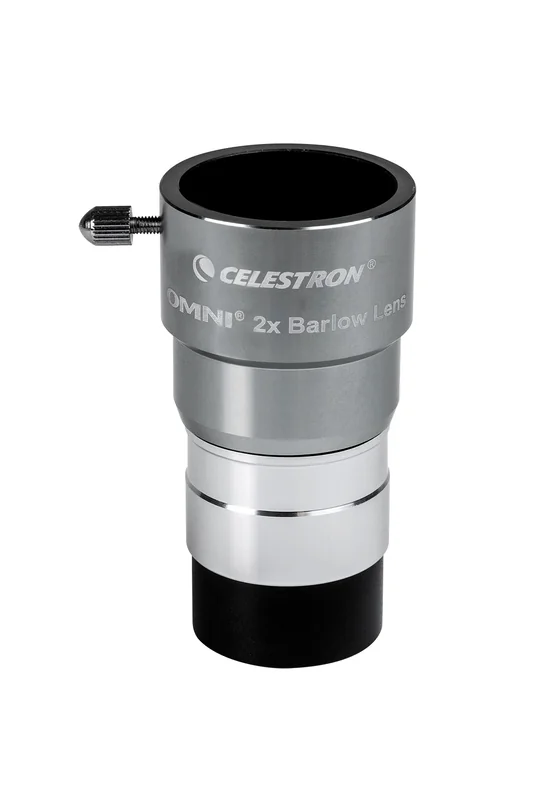
Celestron Omni 2x Barlow
- Optics: 2x amplifier
- Factor: Nominal 2x factor
- Fit: 1.25-inch barrel; accepts 1.25-inch eyepieces
On this page
Celestron Omni 32 mm eyepiece
Choose this for a low-power starting view when its focal length adds something your kit lacks. It is a 1.25-inch eyepiece, not an adapter for any telescope. The field depends on the telescope as well as the eyepiece. The maker gives a 48-degree apparent field and a 27.5 mm field stop. Those describe the eyepiece; they are not the full sky field through every instrument.
- Optics
- Four-element Plössl
- Focal length
- 32 mm
- Fit
- 1.25-inch barrel
- Included
- Single eyepiece
- Weight
- 112.5 g
Celestron Omni 2x Barlow
Adding higher powers from eyepieces you already find comfortable. It adds another part and more optical length. Check focus travel and calculate the resulting powers before choosing it. The 2x label gives the nominal amplification for the intended arrangement. Avoid buying it simply to reach the highest possible power on a box.
- Optics
- 2x amplifier
- Factor
- Nominal 2x factor
- Fit
- 1.25-inch barrel; accepts 1.25-inch eyepieces
- Included
- Single Barlow lens
- Weight
- 60 g
Compare the picks
| Problem | First check | Possible next step |
|---|---|---|
| The view shakes while focusing | Ground, clamps and tripod extension | Improve the support before adding optics |
| Finding the target is hard | Finder alignment and current low-power eyepiece | Consider a wider low-power view if the setup permits it |
| A planet looks large but soft | Focus, conditions and mirror alignment where relevant | Try lower power before buying an amplifier |
| There is a gap in useful magnification | Calculate powers from the eyepieces already owned | Compare a new eyepiece with a suitable Barlow |
| The observing position is uncomfortable | Eyepiece height and room around the instrument | Plan seating or a better station layout |
Factors to consider when choosing telescope accessories
Telescope accessories are most useful when they solve a problem you can name. Start with support, a usable finder and the eyepieces already supplied. The Omni 32 mm eyepiece adds a low-power option in a compatible setup. The Omni 2x Barlow can add powers without replacing every eyepiece.
Match the part to the problem
Use the original kit before buying a set of extras. Check the barrel, optical path and support for each addition. Buy an eyepiece when you need a missing view, or a Barlow when it creates useful powers from the eyepieces you own. Comfort and steady support often come first.
Work from your current equipment
List the telescope focal length and the eyepieces in the case. Include their focal lengths and barrel sizes. You can then calculate which powers exist already. Two different products can make nearly the same view, so a bigger collection does not always add a useful choice.
Use the eyepiece guide for that calculation and the comfort fields. The Barlow lens explanation shows how an amplifier changes the result. Keep optical compatibility separate from mechanical fit: a part that slides in may still fail to reach focus in a particular arrangement.
Put stability and comfort before more power
A support problem appears each time you touch the instrument. Check that the ground is firm and the mount is set as its manual directs. Keep the tripod at a practical height. Follow its load limits rather than hanging an improvised weight where the maker does not allow one.
Think about where your eye rests. A seat can make a slow view easier to sustain. For a shared station, leave space for people to approach without stepping between tripod legs. These are layout decisions rather than reasons to buy a branded accessory.
Check every size in the optical train
The telescope’s focuser or diagonal must accept the accessory barrel. The accessory must accept the next part. A 1.25-inch Barlow paired with a 2-inch eyepiece is not a direct fit. An adapter can change the mechanical path, so check the maker’s intended combination before assuming it solves the issue.
Look for clearance too. A long inserted barrel should not contact a diagonal’s optical surface. Added weight can affect the balance or movement of a small mount. Keep the manual close while you first fit a new part, rather than trying it in the dark.
Work through two power examples
In a 750 mm telescope, a 32 mm eyepiece gives about 23x. Adding a 2x Barlow gives about 47x. In a 1200 mm telescope, the same eyepiece gives 38x, or 75x with the Barlow. Divide the telescope focal length by the eyepiece focal length, then apply the Barlow factor. These are calculated powers for a compatible optical train.
Use the low-power view to find a target and center it before adding the Barlow. Refocus after the change. If the mount shakes or the image stays soft, return to the simpler view and resolve that limit first.
Which accessory solves the problem
Choose telescope accessories after identifying the missing function. The Omni eyepiece and Barlow are useful only when they fit the telescope and the powers you need. A steadier station or better observing position may improve the session before either optical addition.
FAQ
What should I buy with a new telescope?
Check the supplied kit before adding anything. The basic aim is a steady, usable view with an eyepiece and finder that you understand. Use those parts first. Once a real session shows a problem, you can choose a specific addition rather than buying a set that duplicates what is already included.
Will a Barlow replace all extra eyepieces?
It can add useful powers, but it may duplicate one you already have or make handling awkward. Calculate the combinations and check focus travel. A single eyepiece may be the simpler choice for a power you use often. The right answer depends on the existing optical train and observing task.
Does a barrel adapter make any eyepiece fit?
It changes the mechanical connection. Check optical fit as a separate step. Focus travel, clearance and the telescope’s usable field still matter. Check the exact instrument and accessory instructions. Do not force a part or assume that a firm connection means every combination will deliver the intended view.
Should I add a phone holder first?
Add one when recording an eyepiece view is a task you actually want. It is not needed for looking through the instrument. Check the phone and eyepiece fit and the extra weight on the support. Learn to centre and focus the target before adding another handling step.