
Best Dobsonian Telescopes in 2026
Find the best Dobsonian telescope for your space by comparing tabletop and floor-standing models on aperture, support, carrying and guidance.
Our top 2 picks
Choose it for: a visual reflector that can be stored in a compact form and placed on a prepared support.
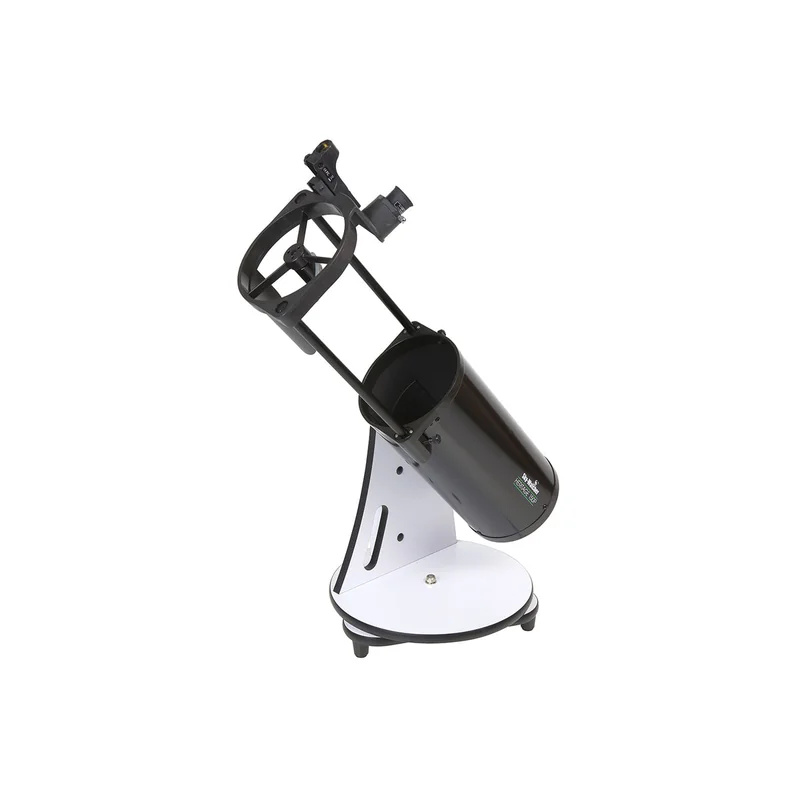
Sky-Watcher Heritage 150
- Optics: 150 mm Newtonian reflector
- Focal length: 750 mm
- Mount: Manual tabletop Dobsonian
Choose it for: more visual aperture with a floor-standing base and phone-assisted finding.
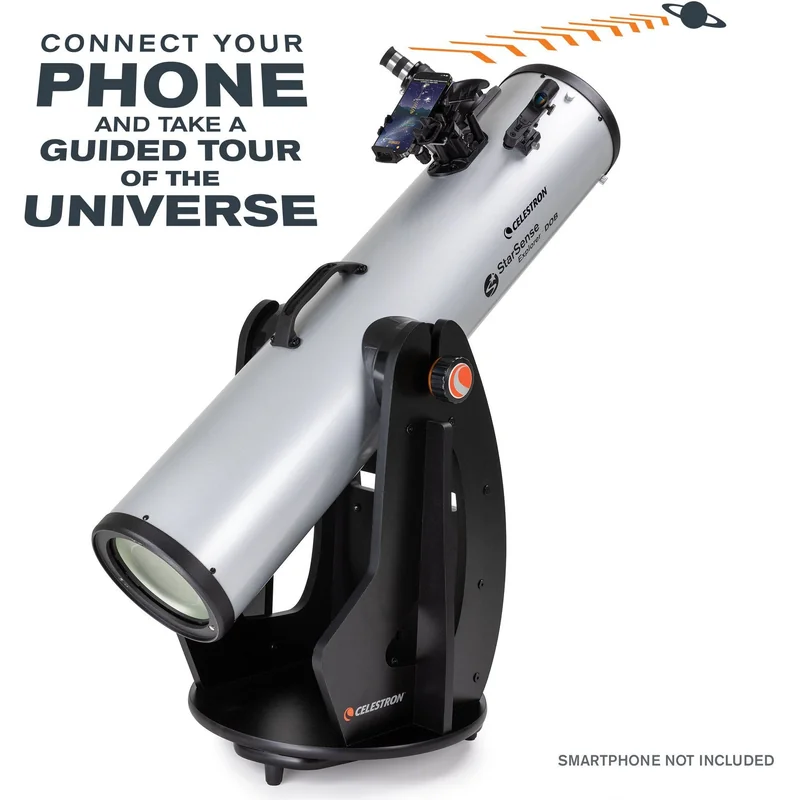
Celestron StarSense Explorer 8-inch Dobsonian
- Optics: 203 mm Newtonian reflector
- Focal length: 1200 mm
- Mount: Manual floor-standing Dobsonian with phone guidance
On this page
Sky-Watcher Heritage 150
Choose this for a visual reflector that can be stored in a compact form and placed on a prepared support. Its tabletop base is low. A stable platform and a comfortable eyepiece position must be part of the station. It has a collapsible tube and a helical focuser. Use the supplied manual to prepare the tube and check alignment after transport.
- Optics
- 150 mm Newtonian reflector
- Focal length
- 750 mm
- Mount
- Manual tabletop Dobsonian
- Included
- Tabletop base and 1.25-inch helical focuser
- Weight
- Not listed by the maker
Celestron StarSense Explorer 8-inch Dobsonian
Celestron StarSense Explorer 8-inch Dobsonian
More visual aperture with a floor-standing base and phone-assisted finding. The larger tube and separate base need a real carrying and storage plan. Manual movement remains part of every observing session. The 203 mm aperture and 1200 mm focal length are the maker’s specification for this exact model. The supplied 25 mm eyepiece gives 48x by focal-length division. The phone dock provides guidance with a compatible device, rather than a motor drive.
- Optics
- 203 mm Newtonian reflector
- Focal length
- 1200 mm
- Mount
- Manual floor-standing Dobsonian with phone guidance
- Included
- Base, 25 mm eyepiece, focuser, finder and phone dock
- Weight
- 20.6 lb / 9.34 kg optical tube only; base is additional
Compare the picks
| Pick | Key facts | Best fit |
|---|---|---|
| Sky-Watcher Heritage 150 | Optics: 150 mm Newtonian reflector; Focal length: 750 mm; Mount: Manual tabletop Dobsonian | a visual reflector that can be stored in a compact form and placed on a prepared support. |
| Celestron StarSense Explorer 8-inch Dobsonian | Optics: 203 mm Newtonian reflector; Focal length: 1200 mm; Mount: Manual floor-standing Dobsonian with phone guidance | more visual aperture with a floor-standing base and phone-assisted finding. |
Factors to consider when choosing a Dobsonian
The support and viewing position separate these two Dobsonians as much as their mirror sizes. The Heritage suits a firm raised platform. The 8-inch StarSense Explorer puts its base on the ground and adds phone guidance to manual movement.
Place the base before choosing a seat
A tabletop base needs a platform that stays still while you focus and move the tube. A light folding table can flex even when it supports the weight. Press gently on the proposed surface and watch whether it rocks. Set the platform outdoors on firm ground and leave space for your chair and feet.
The Heritage’s side eyepiece changes height as the tube tilts. Choose a support that lets the observer reach it at both a low and a high target. For the larger Dobsonian, arrange the seat around the floor-standing base. Leave enough space for the tube to sweep without meeting the chair or a wall.
What the larger mirror adds
The 203 mm mirror has about 1.83 times the geometric collecting area of the 150 mm mirror, before losses from obstructions and coatings. That follows from the squared diameter ratio. More light helps on faint objects, while a larger aperture also offers more potential for fine detail. The aperture guide explains how steadiness and sky conditions affect that potential.
On the Moon, begin along the line between night and day. Look for crater rims and shadows, then increase power while they remain sharp. On Jupiter, first find the disk and nearby moons; look for broad belts during calm moments. On Saturn, identify the ring outline before searching for a faint division. Both telescopes need sharp focus and a settled image for those steps.
For deep-sky observing, begin with a bright open cluster or the Orion Nebula when it is above your horizon. A wide low-power field keeps context around the target. Darker skies help on broad faint structure. The larger mirror gives more light to work with, but a bright sky still washes out low-contrast parts of a nebula or galaxy.
Use the focal lengths to plan the view
Power is telescope focal length divided by eyepiece focal length. With a compatible 25 mm eyepiece, the Heritage’s 750 mm focal length gives 30x, while the 1200 mm StarSense gives 48x. The StarSense includes that 25 mm eyepiece. Use it for finding before adding a shorter focal length.
Choose this for a compatible 10 mm eyepiece would give 75x in the Heritage and 120x in the larger instrument. These are calculated examples, rather than a statement that both packages include one. The shorter focal length narrows the field, so center the target before changing eyepieces and refocus afterward.
Finding and following are separate jobs
The StarSense phone dock helps you aim using a compatible phone. The base remains manual. Once the target is centered, you move the tube to keep it in the field. Use small nudges and let the image settle before judging detail. This becomes more noticeable as power rises.
With the Heritage, use a chart and a low-power field to move from a bright known pattern to the target. Practice the finder in daylight on a distant fixed object away from the Sun. At night, confirm the starting star before following the next step. The star-pattern guide gives a simple route into this skill.
Carry the tube, base and support
The larger instrument’s listed optical-tube mass is 20.6 lb, or 9.34 kg. Its base adds to that. Use the intended lifting points and place each part securely before moving the next. A doorway or stair turn can be harder than the straight distance from storage to the observing spot.
The Heritage collapses for storage, but the tabletop support may still need to travel. Include that support and a seat when comparing trips. A small tube is most convenient when a suitable platform already waits at the observing place. For shared equipment, keep caps and small fittings together in the same case.
Prepare the mirrors for a clear view
Both instruments are Newtonian reflectors. Learn the model’s collimation check before adjusting a mirror. Alignment puts the optical parts on their intended path. The collimation guide explains the aim; use the model’s manual for the screws and sequence.
Set the telescope outdoors while you prepare the chart and chair. A warm mirror can disturb the image as it settles towards outdoor temperature. Begin with a low-power target and reassess the view before pushing the power higher. Celestron’s telescope basics guide discusses this cooling step.
At pack-down, keep loose caps and tools clear of the open tube. Follow the manual for drying damp optics and storing the telescope. Put the base where it will not be knocked, with the next observing trip easy to reach.
Which Dobsonian to choose
Choose the Heritage for a compact mirror telescope with a prepared support. Choose the 8-inch StarSense for more aperture and assisted finding when its separate tube and base fit your route. For other mounting styles, compare the telescope section.
FAQ
Is the larger Dobsonian always the better choice?
It offers more aperture, but the full carrying and storage task can decide whether you use it. Compare the base as well as the tube. A smaller instrument on a prepared support may be more useful in a restricted space. Choose the aperture you can set up steadily and manage comfortably.
Can I put the Heritage on any table?
It needs a firm raised surface that supports the complete instrument and gives a usable eyepiece height. Check for flex or rocking while focusing and moving the tube. Include that surface in the carrying plan if it must travel. Its cost is part of the budget unless a suitable one is already available.
Does StarSense Explorer follow a target automatically?
This model has a manual Dobsonian base. Its compatible-phone guidance helps you aim, while you move the instrument yourself. It does not supply powered following. Keep that distinction in mind for a shared station and for high-power views, where holding an object in the field needs small adjustments.
What should a first-time reflector owner learn?
Learn the mount movement, finder use, focusing and the maker’s collimation check. Start with the supplied low-power view before adding accessories. Plan how the equipment dries and goes back into storage. These repeatable steps make the mirror aperture useful rather than leaving the owner with a promising specification and a difficult routine.