
What Do the Numbers on Binoculars Mean
What do the numbers on binoculars mean? Read magnification, aperture, exit pupil and field of view with worked examples for a sensible night sky choice.
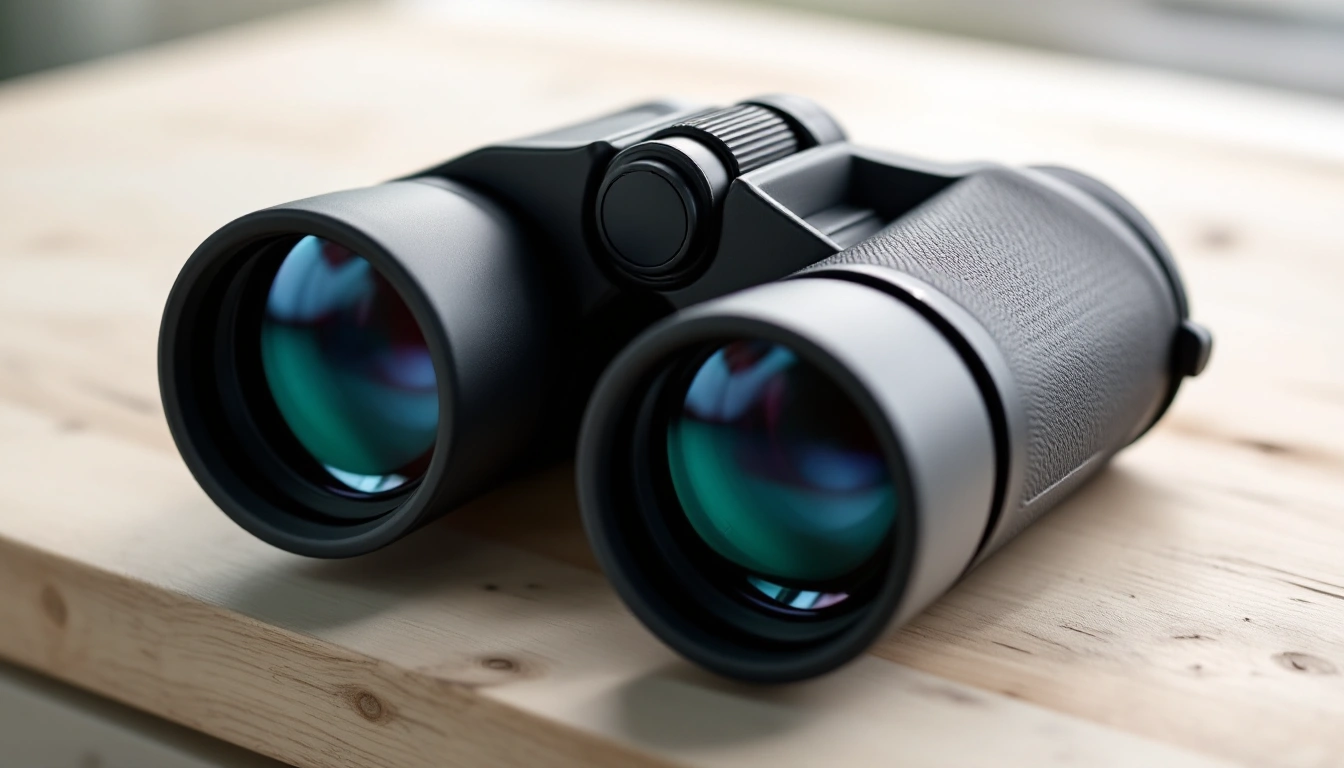
In 10x50, 10 is magnification and 50 is front opening in millimeters. Divide 50 by 10 for a 5 mm exit pupil. Read field, weight and eye relief separately before choosing.
On this page
What do the numbers on binoculars mean? The large pair of numbers normally states magnification and front opening. Other figures describe field of view, eye relief, weight and eye spacing. Together they help you choose a useful view. None of them is a complete quality score.
Read the first number as power and the second as aperture in millimeters. Divide aperture by power to find exit pupil. Compare field figures only when the units match. Check eye relief for glasses and weight for handheld use. Then test the fit, because a spec sheet cannot tell you how the pair rests at your eyes.
What do the numbers on binoculars mean in practice?
A marking such as 10x50 means ten-times magnification and a 50 mm front opening on each side. The multiplication sign separates two facts. It does not tell you to multiply them for a performance score.
Magnification describes apparent scale. At higher power, a given target looks larger in the view. Hand movement is enlarged as well. That is why a higher-power pair may need a mount even when a lower-power pair is comfortable in your hands.
Aperture is the diameter of the front optical opening. A larger opening can collect more light. It can also mean more size and weight. Compare aperture with magnification and the way you will hold the pair. A light beam that misses your eye does not help the view.
There are two openings, but the label is the diameter of each one. Do not add them and call the result a single telescope aperture. Binocular viewing uses two optical paths and two eyes. The experience cannot be reduced to that simple sum.
The definitions come from Nikon's guide to binocular markings. Exact figures for a named model should come from its own maker specification, not a similar-looking pair.
Exit pupil: a short calculation
Exit pupil is the diameter of the beam leaving an eyepiece. Divide the front opening by magnification. For 10x50, the calculation is 50 mm / 10 = 5 mm. The units stay in millimeters because magnification is a ratio.
For a 7x50 pair, 50 / 7 is about 7.1 mm. For a 15x70 pair, 70 / 15 is about 4.7 mm. The maker lists those same exit-pupil figures for the Cometron and SkyMaster models compared here. These examples show the method, not a ranking.
If your eye pupil is smaller than the beam, some light falls outside it. Eye pupil size depends on the person and lighting. Do not assume a large exit pupil will give every observer the same gain. It may make eye placement easier, but the rest of the optical system still matters.
Exit pupil also differs from eye relief. One is beam width. The other is the distance from the eyepiece to the viewing point. A pair can have a generous beam yet too little eye relief for your glasses. Keep the two terms separate when reading a comparison.
Field of view: degrees or distance
Angular field is the width of sky visible through the pair, measured in degrees. A wider true field makes it easier to fit a large star pattern or find your way along a star hop. Check the centre and edge of the view as separate parts of the fit and focus check.
Linear field states the width visible at a given distance. Common labels use feet at a thousand yards or meters at a thousand meters. You cannot compare two bare width numbers if their units and reference distances differ. Read the whole label.
For a linear width and distance in the same units, the angle is twice the arctangent of half the width divided by the distance. That is basic right-triangle geometry. You do not need to calculate it when both makers already give angular field. Use the direct degree values to avoid unit mistakes.
True field and apparent field are different. True field is the patch of sky. Apparent field describes how wide the eyepiece view seems to your eye. Do not compare one maker's apparent field with another maker's true field and treat them as equivalent.
Eye relief and eye spacing
Eye relief tells you how far behind the eyepiece your eye must sit to see the full field. Glasses hold the eye farther back. That makes this figure useful, though the eyecup and the recess of the glass affect the real fit too.
Check whether the eyecups fold or twist down for glasses. Try the pair without pressing the frames into it. If you see a small central circle rather than the full field, your eye may be too far away. More focus adjustment will not fix that.
Interpupillary distance is the spacing between the centers of your eyes. A binocular hinge has a range over which the two barrels can move. The maker may list a minimum and maximum in millimeters. Both need to fit the person using the pair.
This is a useful check for an adult sharing binoculars with a child. If the barrels cannot get close enough, the child may see overlapping circles or only one clear side. An adult should set up the view and check comfort before using it as an observing activity.
Weight and mounting numbers
Weight matters because the pair is held above your normal resting arm position. A mass that feels fine on a table can feel tiring when the target is high. Check the figure for the exact variant and whether it includes a strap or case.
Tripod-adaptable means there is a maker-approved mounting method. It does not mean a tripod comes in the box. Check whether an adapter is included, how it fits and what load the tripod head can carry. Then check that you can get your eyes to the eyepieces at sky-viewing angles.
Do not pick a tripod only from its maximum height. The binocular attachment and the position of your head matter too. A sturdy lower setup with a suitable seat may work better than a tall tripod whose head shakes in use.
Water-resistant, waterproof and nitrogen-filled describe different construction claims. Read the exact model's wording. They are not implied by aperture, price or a rubber coating. Keep the pair within its manual's use and care limits.
Put the numbers into an observing decision
For a short handheld session, start with comfortable power and mass. For a mounted session, add the adapter, tripod and viewing position. For glasses, check eye relief and eyecups before choosing from field figures. For a shared pair, check the hinge range as well.
If two models still look similar, ask what problem each solves. One may be easier to carry. Another may hold a wider star pattern. A third may fit your glasses better. Those are useful differences that a single headline number misses.
Read how to choose binoculars to put the checks in order. The 10x50 guide covers one common size in more detail. Use a buying comparison only after you know whether the kit will be handheld or mounted.
FAQ
Does a bigger first number mean a brighter view?
No. The first number is magnification. Brightness at your eye depends on aperture, exit pupil, optical transmission, your eye and the target. Higher power can make a target larger while making hand movement more obvious. Read the two main numbers together and test the view from a stable position.
What does the x stand for?
It marks magnification, as in ten times for 10x. The following number is normally the front opening in millimeters. It is not a second power setting. A zoom pair uses a range of magnifications, so read the exact label and manual if more than two numbers appear.
Is field of view the same as magnification?
No. Magnification sets the apparent scale of the target. Field of view describes how much of the scene fits at once. Eyepiece design affects how much of the scene fits. Compare power and field as two separate figures. Compare the maker's true angular field when you want the same units.
Can I compare binoculars from the label alone?
Only as a first step. The label helps sort power and aperture. It leaves out fit, mass, weather protection and much of the optical design. Check the complete maker specifications and manual, then try the eye position if you can. A comfortable sharp view is the useful result.
Read next
Use the numbers to plan the view
What do the numbers on binoculars mean for your choice? They describe power, opening and fit. Use them together. Use magnification and aperture to understand the view. Use field, eye relief and weight to decide whether that view will work for your eyes and observing position.