
Kinds of Telescope
Compare the main kinds of telescope—lens, mirror and compound designs—without confusing the optical tube with the mount.
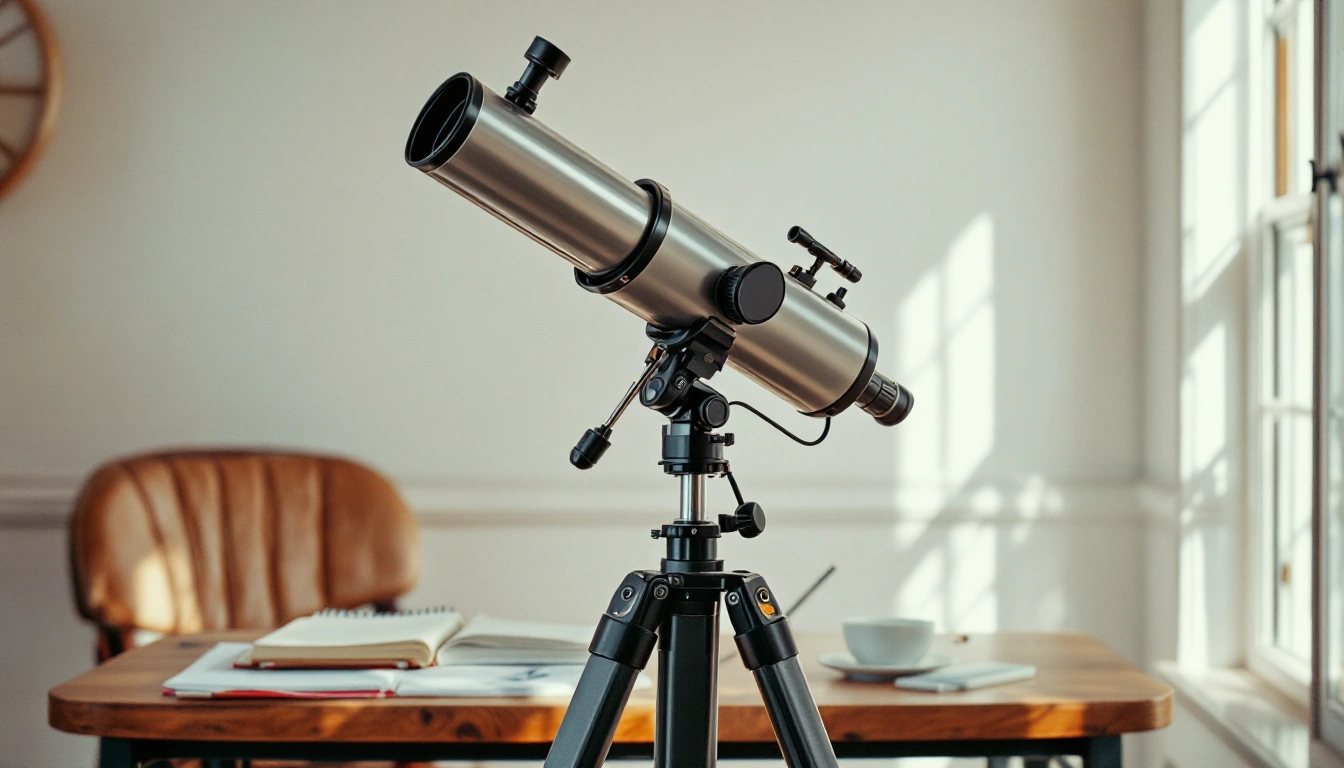
Choose the optical design for the view, then the mount and full kit for the way you will use it.
On this page
- The main kinds of telescope
- Refractors: a lens at the front
- Newtonian reflectors: a mirror at the back
- Compound designs: a folded light path
- the setup mounts are a separate choice
- Focal length, aperture and magnification
- Match a design to the observing task
- Visual observing and imaging are different jobs
- Check support, storage and maintenance together
- FAQ
- Continue from here
- Choose a complete observing system
The main kinds of telescope use lenses, mirrors or a combination of both. Those choices describe how the image forms. Mounts describe how the instrument points. Keep these two decisions apart when comparing setup, maintenance and the view you want.
Choose a refractor for a lens-based visual setup with little routine alignment. Consider a Newtonian reflector when aperture matters and you can learn mirror care. Compound designs fold the light path into a shorter tube. Then choose the support, controls and carrying load that fit the task. An optical design alone is not a complete kit.
The main kinds of telescope
The most useful first split is between a refractor and a reflector. A refractor bends light through a front lens. A reflector directs it with a curved mirror. Compound designs add lens elements to a mirror system. Each choice trades optical behaviour against the mechanical form of the tube.
The British Astronomical Association describes refractors, Newtonians and Schmidt-Cassegrain designs. The Celestron buying guide also distinguishes Maksutov-Cassegrain instruments and imaging-specific designs. Use these categories to narrow a task, then compare the exact model.
Avoid treating one design as the winner for every observer. Two instruments in the same optical family may have very different focal lengths and mounts. A well-matched small setup can be more useful than a larger one that is awkward to put outside.
| Design | How it forms the image | Practical focus | Ownership task |
|---|---|---|---|
| Refractor | Front lens bends light to a focus | Lens correction, tube length and mount support | Care for the front lens and keep the support steady |
| Newtonian reflector | Primary mirror and a small diagonal mirror | Aperture, side eyepiece and chosen mount | Learn mirror alignment and allow the tube to settle outdoors |
| Schmidt-Cassegrain | Mirrors and a front corrector fold the light path | Compact tube with a long effective focal length | Plan power, alignment and accessory fit for the full kit |
| Maksutov-Cassegrain | Mirrors and a meniscus corrector | Compact form often used for narrower high-power views | Allow for weight, outdoor settling and the mount |
Refractors: a lens at the front
The front lens, or objective, gathers light. An eyepiece then lets your eye examine the image. The tube is often closed, with the lens held in its fixed assembly. That reduces the routine optical alignment work compared with an adjustable Newtonian mirror system.
Colour correction is one of the design choices. Different colours bend by different amounts. Lens combinations reduce the resulting colour fringe, with the details depending on glass and optical design. An achromatic refractor and a better-corrected lens system do not have the same bright-target tradeoff simply because both use lenses.
A long tube can ask more of a mount and storage space. A shorter achromat can be compact while showing more colour around a bright target. Compare the aperture and focal ratio alongside the lens design. The refractor guide explains how these fields work together.
Refractors can suit quick visual sessions when the full kit is manageable. That does not make every refractor a light travel instrument. A large lens, strong support and heavy tripod can turn a short tube into a substantial load.
Newtonian reflectors: a mirror at the back
A Newtonian’s curved main mirror gathers light at the rear of the tube. A small flat mirror near the front directs it sideways to the eyepiece. That side view changes where the observer stands and how the image responds to movement.
The design can offer useful aperture at a modest cost. The tradeoff includes optical alignment, often called collimation. You need to learn the maker’s check and adjustment method. A bright-target view can suffer when the mirrors are poorly aligned, even if the main mirror is large.
The front is usually open in a classic Newtonian. Keep loose parts and fingers out of the optical path. Think about carrying and storage, including any open or collapsible section. Cleaning a coated mirror requires the maker’s method, rather than a casual wipe.
The reflector explainer covers this light path and the image orientation. The mount may be a Dobsonian or another suitable arrangement. You choose that support for the way you aim and observe, not because the mirror forces a single mount type.
Compound designs: a folded light path
A compound, or catadioptric, telescope combines lenses and mirrors. The folded path can put a long effective focal length in a shorter tube. This is a useful distinction between optical focal length and the length of the object you must carry.
A Schmidt-Cassegrain uses a front corrector with its mirror arrangement. The eyepiece sits at the back in a normal visual setup. These instruments can serve lunar, planetary and deep-sky tasks, with the exact field and support depending on the model and accessories.
A Maksutov-Cassegrain uses a different front corrector. Celestron describes this family as compact and well suited to narrower lunar and planetary views. That is a design direction, not a promise of equal detail from every aperture. Its weight and thermal needs still belong in the decision.
Compact tubes can need substantial mounts. Computer control also adds power and alignment steps. Include those parts when comparing a compound instrument with a manually aimed refractor or reflector. Tube size by itself is an incomplete measure of convenience.
the setup mounts are a separate choice
An altazimuth mount moves up and down and turns side to side. On a manual version, those are the movements you make to follow a target. This arrangement is easy to understand but still asks for small corrections as the object crosses the view.
An equatorial mount uses axes aligned with the sky’s coordinate system. It adds a polar-alignment step. Once set up, its motion can suit following an object, especially for tasks that need tracking. That extra setup may be unnecessary for a short casual view.
A Dobsonian is an altazimuth support arrangement commonly used with a Newtonian. A tabletop version needs a raised surface. A floor-standing version has a taller base. Neither term tells you that motors or automatic tracking are included.
Read the full mount description. “Smartphone-enabled” can mean guidance that tells you where to push. “Computerised” may mean a motorised system with its own setup process. Those are different jobs for the observer and different demands on power or a phone.
Focal length, aperture and magnification
Aperture is the diameter of the main lens or mirror. It affects light collection and the potential for fine detail. Focal length sets magnification with a chosen eyepiece. Focal ratio compares those two dimensions.
To calculate visual magnification, divide telescope focal length by eyepiece focal length in the same units. You can change power by changing the eyepiece without changing the aperture. This is why a very large advertised power does not identify a better optical tube.
Low power can make searching and broad targets easier. Higher power helps only when the instrument and conditions preserve useful detail. You need steady support and accurate focus at either scale. A mount that shakes while you turn the focus knob can hide the benefit of a good optical design.
The aperture reference and how telescopes work explain the measurements. Use those definitions when comparing the maker tables, rather than ranking products by the largest number printed on a box.
Match a design to the observing task
For a first look at bright targets, a simple visual kit can be the right starting point. Think about how quickly you want to set up and whether you prefer to learn mirror alignment. Compare a lens-based kit with a tabletop reflector before deciding that one routine fits you better.
For faint deep-sky targets, aperture and a suitable observing site become important. A larger reflector may be worth the extra bulk. Check whether you can move the base and tube and whether the viewing height is comfortable. Do not choose a large mirror without a place to use it.
For planets, useful detail depends on more than focal length. Aperture, alignment, atmospheric steadiness and mount control all matter. A narrow high-power field also asks more of manual following. Choose the complete experience you can manage, then use the planet telescope guide for the actual options.
For wide-field visual views, compare the attainable low power and field with the intended eyepiece. A short focal length can help, but the focuser and eyepiece field stop also constrain the view. The eyepiece guide keeps those choices connected.
Visual observing and imaging are different jobs
A telescope with an eyepiece gives you a direct visual experience. A smart imaging telescope collects and displays a processed image through its app. The difference affects what a shared observing session feels like and what equipment you carry.
Do not assume a device labelled as a telescope accepts a normal eyepiece. Celestron’s first-telescope guide includes imaging-specific optical designs that do not. Check the intended use and included camera or eyepiece support for the exact model.
Long-exposure imaging also asks different things of the mount from a brief visual view. A phone adapter does not add tracking. A motorised mount does not by itself prove that every camera and optical combination is ready for imaging. Start from the kind of result you want and check the whole system.
Use the smart-telescope section if app-based imaging is the goal. Use the visual buying guides if you want to look through an eyepiece. This keeps two useful tasks from being confused by a shared product label.
Check support, storage and maintenance together
Put the tube, mount, tripod or base in the carrying plan. A tube weight and a complete-kit weight are different facts. For a tabletop model, include the stable raised surface in the task even if you already own it.
Look at the observing height. The eyepiece position can change greatly as the tube points higher. A rear eyepiece and a side eyepiece ask for different standing or seating positions. Plan the space for the person as well as the equipment.
Ask where the dry equipment will live between sessions. A closed lens tube and an open reflector need different handling, but both require sensible caps and care. Let the maker’s manual guide cleaning and damp storage. Avoid buying maintenance accessories before you know which task they serve.
FAQ
Is a Dobsonian a different optical type?
It describes a mount arrangement commonly used with a Newtonian reflector. The mirrors form the image, while the base controls movement. Compare those choices separately. A tabletop Dobsonian and a floor-standing one can share an optical family while having very different support, carrying and viewing-height needs.
Which kind of telescope is easiest to use?
The easiest setup fits your observing task and the route outside. A simple altazimuth mount can reduce the learning needed for pointing. A refractor reduces routine optical alignment. A reflector can offer more aperture. Compare those tasks with the space, time and carrying load you are willing to manage.
Does a compact telescope have a short focal length?
Not always. Compound designs fold the light path, so effective focal length can be much longer than the tube. Check the maker’s figure rather than estimating it from a photograph. The number matters when you calculate eyepiece power, while physical tube length matters for carrying and storage.
Should I choose the highest magnification?
No. Power is only one part of a useful view. Aperture, focus, support and conditions set limits on detail. Begin with the low-power eyepiece to find the target. Increase power when the view stays clear and the mount lets you keep the object in the field.
Continue from here
Choose a complete observing system
Choose between the kinds of telescope by optical task, then choose the mount and full kit by use. Lenses, mirrors and folded paths offer different practical choices. The best fit is the design whose setup, care and view match the way you plan to observe.