
Dobsonian Telescope
Learn what a Dobsonian telescope mount does, how tabletop and floor-standing versions differ and what day-to-day ownership involves.
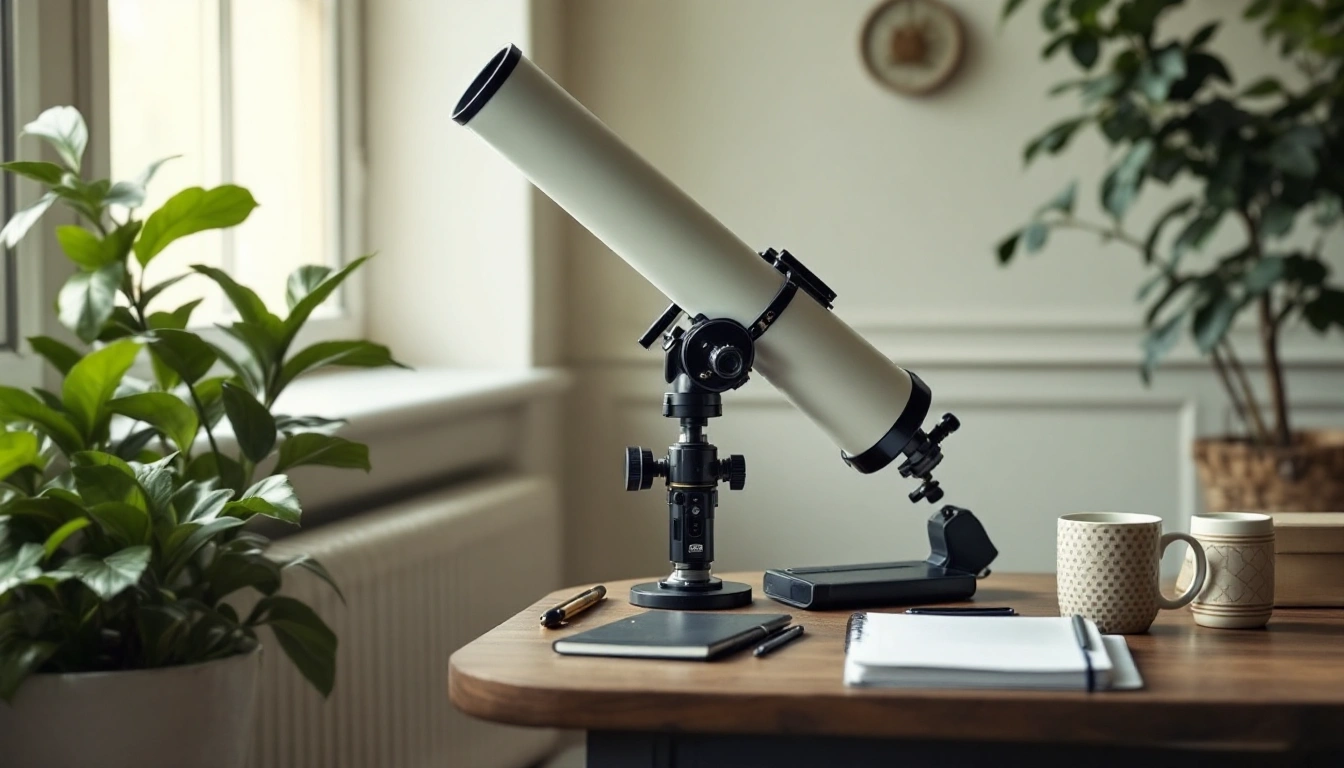
A Dobsonian is a mount choice paired with mirror optics. The full support and carrying plan matters as much as aperture.
On this page
A Dobsonian telescope is usually a Newtonian reflector on a simple altazimuth base. The mirrors form the image. The base lets you move the tube up and down and turn it left and right. That distinction explains both its appeal and the setup it needs.
Choose a Dobsonian when you want visual observing with manual movement and room for its base. A tabletop model needs a firm raised surface; a floor-standing model needs clear ground and storage space. Allow for mirror alignment and cooling. Compare complete setups rather than treating a compact tube as the whole carrying load.
What makes a Dobsonian telescope
“Dobsonian” describes the support arrangement, not a separate way to focus light. Most examples use a Newtonian optical tube. A curved main mirror gathers light at the back of the tube. A smaller mirror sends it sideways to the eyepiece near the front.
The base supports the tube’s altitude movement and turns around a vertical axis. In a manual version, you push the instrument to aim it. The Celestron first-telescope guide separates this form of altazimuth mount from an equatorial mount and a motorised system.
This simple arrangement can leave more of the budget for aperture. It also leaves the observer responsible for finding and following the target. Phone guidance can help with direction on some models, but the base still needs a hand to move it unless the maker specifies motors.
Tabletop versus floor-standing support
A tabletop version has a low base. It needs a firm raised surface that supports the complete instrument and stays steady while you focus. A light folding table can move when someone rests a hand on it. The telescope’s small packed shape does not remove this support requirement.
A floor-standing model puts its base on the ground. You still need a stable place to stand it and a comfortable way to reach the eyepiece. Check how the eyepiece height changes as the tube tilts. A seat may improve the practical setup more than another optical accessory.
Think about the path outside. A tabletop model adds the problem of carrying or finding its support. A larger floor base adds bulk through doors and into a vehicle. Choose the version whose complete setup can reach your observing spot without an awkward last step.
What the mirrors ask of you
Collimation is alignment of the optical parts. It helps the mirrors deliver the intended image. Follow the exact model’s instructions and use the adjustment points the maker identifies. The collimation guide explains the idea before you handle the controls.
Allow the instrument to settle to outdoor conditions before judging a high-power view. Air movement inside or around a warm tube can soften detail. There is no single wait time that fits every tube and night. Set up early enough to use the first part of the session for easier low-power targets. (Celestron telescope basics, page 8)
Keep dust caps and the storage location in the plan. Follow the maker’s cleaning advice rather than wiping a mirror as if it were a window. An open or collapsible tube needs care in transport so clothing, straps or loose parts do not enter the optical path.
Manual tracking at the eyepiece
Start with a low-power eyepiece. Find the object, centre it and focus before adding more power. The wider field gives you time to learn which nudge moves the view in the direction you want.
At a higher power, a small push has a larger effect on where the object sits in the view. Use slow movements and let the image settle after focusing. A shared session works better when one adult manages the mount while each visitor takes a turn.
Near the overhead point, an altazimuth mount can need more awkward changes in direction. Choose another target or wait for a more comfortable position if the movement becomes difficult. Ease of use depends on where you point as well as the base design.
Compare models by the task
For actual product choices, use the Dobsonian buying guide. It compares the tabletop Heritage 150 with a floor-standing StarSense Explorer model. The decision turns on aperture, support, carry and guidance, rather than a claim that one base suits everyone.
Use the reflector guide for the light path and image orientation. If you are choosing your first instrument, the beginner shortlist puts this design beside tripod-mounted refractors. That is the better place to decide whether mirror care fits the way you want to observe.
FAQ
Is a Dobsonian the same as a reflector?
A reflector describes the optical design, while Dobsonian describes a mount arrangement commonly paired with a Newtonian reflector. A Newtonian can sit on other kinds of mounts too. Keeping those choices separate helps you compare the view, the controls and the space the complete instrument will need.
Does every Dobsonian need a table?
Only tabletop versions need a raised support. Floor-standing versions have a taller base intended to sit on the ground. Check the exact model rather than the product family name. For either version, plan the eyepiece height and a firm surface before deciding where the observing station will go.
Can a phone move a manual Dobsonian?
Phone guidance can show where to push an enabled model, but guidance alone does not add motors. Read the maker’s mount description. A manual telescope still needs the observer to point it and follow the target. This matters when visitors will share the eyepiece or the view uses high power.
Is a large Dobsonian easy to carry?
That depends on the complete instrument and the route. Check the tube and base separately, plus the space each needs. A component weight is not a kit weight. Measure doorways and storage before choosing aperture, and consider who will move the equipment when the usual station lead is away.
Continue from here
Plan the base and viewing position
A Dobsonian telescope offers a direct way to aim a visual reflector. Choose it when its support, carrying needs and mirror care fit your routine. The right version is the one you can set up steadily and use without rushing.