
Reflecting Telescope
See how a reflecting telescope works by following the Newtonian light path and comparing mirror care, mount choices and image orientation.
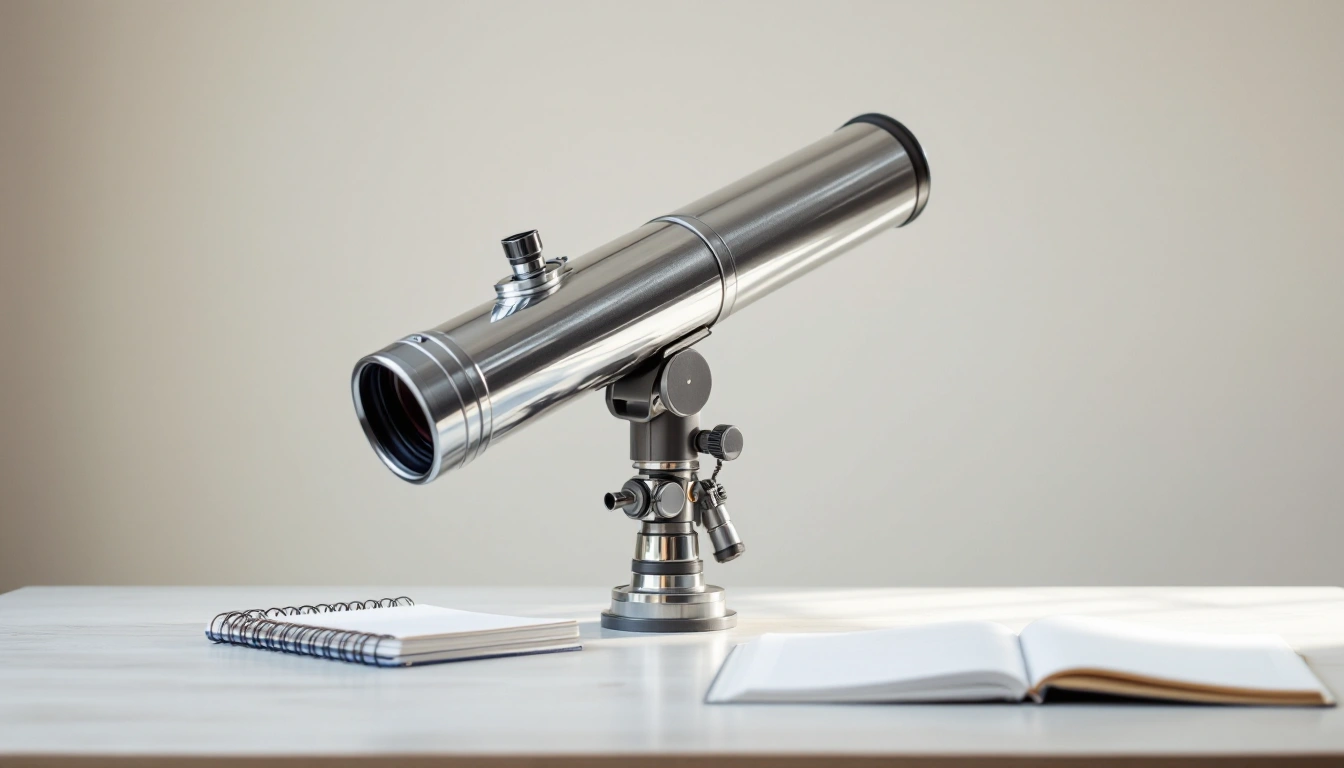
Mirror aperture can be a strong reason to choose a reflector. Match it with a mount and care routine you can manage.
On this page
A reflecting telescope uses a mirror to gather and focus light. In a Newtonian, a small flat mirror directs that light to an eyepiece near the front of the tube. It can give a visual observer useful aperture, with mirror alignment and a suitable mount as part of the routine.
A Newtonian reflector suits someone who wants a larger light-gathering mirror and can learn basic alignment. Choose the mount separately from the optical design. Allow space for the complete setup, time for the tube to settle outdoors and a plan for clean, dry storage. Image orientation differs from a normal daytime view.
How a reflecting telescope gathers light
Light enters the open end of a Newtonian tube and reaches the main mirror at the back. Its curved surface reflects the light toward a focus. Before the rays reach that point, a smaller flat mirror sends them out the side to the focuser and eyepiece.
The British Astronomical Association’s design guide describes this arrangement. It also distinguishes Newtonians from compound designs that use lenses as well as mirrors. “Reflector” is a broad optical term; the details of a specific design still matter.
This original sketch explains the path rather than the exact shape or scale of a particular instrument. The support vanes and mechanical parts are omitted so the main reflection is easy to follow.
Aperture and the central obstruction
The primary mirror’s diameter is the aperture. A larger aperture gathers more light and can resolve finer detail under suitable conditions. It also tends to bring a larger or heavier setup. Compare those gains with the route outside and the support the instrument requires.
The secondary mirror blocks part of the incoming beam. Its support also sits in the light path. This central obstruction is a normal feature of the design. It affects how light is distributed in a star image; it does not mean that the middle of the view is missing.
Keep comparisons grounded in the full instrument. A small difference in one optical feature does not settle the choice between two telescopes. Mirror quality, alignment, focus and observing conditions all affect the view. Mount movement can hide a useful optical advantage if the instrument will not stay steady.
For the meaning of aperture, use the aperture guide. The Celestron telescope guide explains why aperture and the intended observing target belong in the same buying decision.
Why the view can seem the wrong way round
A Newtonian’s image is not arranged like the upright view through an ordinary window. The apparent direction depends on the tube and eyepiece position. This is usually manageable for sky observing, where there is no need to keep a horizon upright.
A small movement of the tube may first seem to send the target the wrong way. Practise with a low-power view and slow nudges. Watch the target as you move, then return it to the centre. The response becomes easier to predict with use.
When reading a chart, compare the pattern rather than expecting every label to line up with the eyepiece. Rotate the chart to fit the view where appropriate. Avoid adding an image-correcting accessory unless you have a specific task and the maker confirms the optical fit.
Choose the mount as a separate decision
A Newtonian can use a Dobsonian, equatorial or another suitable mount. These change how you aim, follow a target and carry the equipment. The tube’s optical label does not tell you which movement system comes in the box.
A Dobsonian mount moves in altitude and azimuth. It is common in visual reflectors because its base can support a useful aperture with simple manual controls. A tabletop version adds a raised-surface requirement that a floor-standing version does not have.
An equatorial mount brings a polar-alignment step. Its axes can help with following the sky once it is set up, but the extra controls may slow a short visual session. A mount made for a smaller tube is not automatically suitable just because the attachment looks similar.
Check the included base, tripod, counterweights and accessories for the exact product. Keep tube-only and full-kit listings distinct. Use the Dobsonian product comparison for actual choices rather than buying from the design description alone.
Collimation is alignment
The main and secondary mirrors must direct light along the intended path. Collimation is the check and adjustment of that alignment. It is a skill to learn from the maker’s manual, not a sign that the reflector is defective.
Learn which screws adjust the main mirror and which parts should stay untouched. Use the maker’s order of steps. Random changes can turn a small alignment task into a confusing one. Record the setup or return to the starting position when the instructions call for it.
The collimation guide explains what you are checking. For a new instrument, read the exact manual before moving an adjustment. A generic tool cannot tell you which mechanical part your model uses or whether a clamp is tight enough.
Cooling, dew and storage
A tube brought from a warm room into cold air can take time to settle. Moving air can disturb the light path. Give the instrument time outside while you prepare the session and begin with a forgiving lower-power target. (Celestron telescope basics, page 8)
There is no useful universal cooling time for every mirror and night. Size, construction and the temperature change matter. Judge the view after careful focus and allow for the conditions rather than treating a single early image as a verdict on the optics.
For damp equipment, use the maker’s drying and storage advice. Keep loose objects away from an open tube. Do not touch a mirror surface to see whether it feels wet. Mirrors have coatings that need their own cleaning method, and dust seen in room light does not by itself call for cleaning.
Plan a storage place where the tube cannot roll, tip or collect knocks. Keep small caps and adjustment tools together. A safe carrying routine is part of ownership, particularly when the telescope moves between a club store and a shared site.
Compare the mirror design with lenses
Reflectors can put more aperture within a given spending level, while a refractor can reduce routine alignment work. A long refractor asks for a different mount and storage shape. A compact compound design changes the tube and focal-length tradeoff again.
Use the refractor guide for the lens side of the comparison. The types page keeps these optical choices separate from mount labels. For a first purchase, use the beginner comparison to see how the designs become complete kits.
FAQ
Is a reflecting telescope good for planets?
A well-aligned reflector can be useful for planetary observing. Aperture, focus and mount control matter alongside the design. Start with a steady lower-power view and let the tube settle outdoors. Use more power only when detail remains clear, rather than relying on the largest calculated number for the eyepiece.
Does every reflector have an open tube?
No. The broad term includes several optical designs. A classic Newtonian commonly has an open front, while compound designs may include a front corrector. Check the actual model. Its construction affects carrying, cooling and care, so the family label alone is not a full description of the instrument.
Will I need to align the mirrors every night?
Follow the maker’s recommended checks for the exact instrument and how it is transported. A check does not always require an adjustment. Learn to recognise the intended alignment before turning screws. The carrying and storage routine can matter, and a generic schedule is less useful than the manual’s method.
Can I use a Newtonian for daytime views?
The image orientation and eyepiece position can make it less convenient for that task. A sky instrument does not need to keep the scene upright. If daytime viewing is a main goal, compare a suitable refractor or spotting design and its stated image correction before choosing a Newtonian on aperture alone.
Make mirror care part of the routine
A reflecting telescope can give a visual observer useful aperture with a simple mirror design. Choose it with a clear mount, alignment and storage plan. Those practical details turn a promising optical specification into a setup you can use.